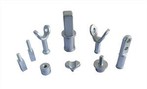
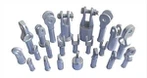
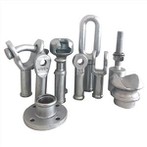
A device that can withstand voltage and mechanical stress installed between conductors or conductors of different potentials and grounding members. There are many types of insulators with different shapes. Although the structure and appearance of different types of insulators are quite different, they are all composed of two parts: insulators and connecting fittings. Insulators are a special insulation control that can play an important role in overhead transmission lines. In the early years, insulators were mostly used for telephone poles, and slowly developed a lot of disk-shaped insulators hung on one end of the high-voltage wire connection tower.
It is to increase the creepage distance, usually made of glass or ceramics, called an insulator. Insulators should not fail due to various electromechanical stresses caused by changes in the environment and electrical load conditions, otherwise the insulators will not have a significant effect and will damage the use and operating life of the entire line. According to different installation methods, insulators can be divided into suspension insulators and post insulators; according to the different insulating materials used, they can be divided into porcelain insulators, glass insulators and composite insulators (also called composite insulators).
According to different voltage levels, they can be divided into low-voltage insulators and high-voltage insulators; according to the different environmental conditions used, pollution-resistant insulators used in polluted areas are derived; DC insulators are derived according to different types of voltages; there are also various special purposes Insulators, such as insulating cross arm, semiconductor glaze insulator and tension insulator for power distribution, spool insulator and wiring insulator, etc. In addition, according to the different breakdown possibilities of insulators, it can be divided into two types: A-type or non-breakable insulator and B-type instant-breakable insulator.
Suspension insulators are widely used in the insulation and mechanical fixing of high-voltage overhead transmission lines and soft busbars of power stations and substations. In the suspension insulators, it can be divided into disc suspension insulators and rod suspension insulators. Disc suspension insulators are the most widely used insulators for transmission lines. Rod suspension insulators have been widely used in Germany and other countries. Post insulators are mainly used for insulation and mechanical fixing of bus bars and electrical equipment in power plants and substations. In addition, post insulators are often used as part of electrical equipment such as disconnect switches and circuit breakers.