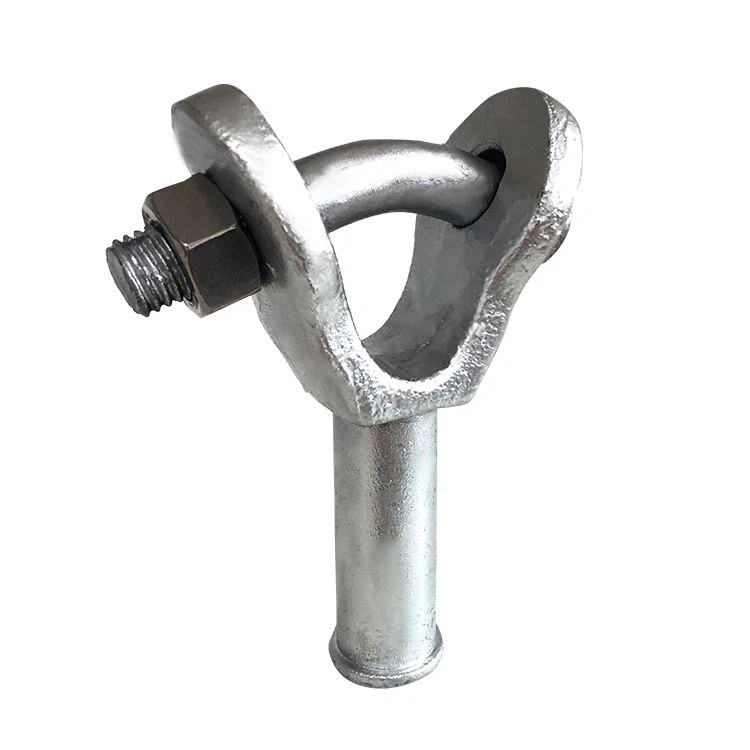
The electric power industry needs fittings to help the erection of lines and the transportation of electric energy. This is what we all know. There are many kinds of fittings, and each kind of fittings has special functions and characteristics. We have seen some porcelain and glass on the power lines. Insulators or other materials are insulators. Are these various insulators belong to power fittings? The answer is here:
An insulator is a commonly used tool for power lines and an insulating material placed on the line. Although it is not made of metal materials, it is still classified as a power fitting. At present, there are three commonly used porcelain insulators, composite insulators, and tempered glass insulators. Each insulator has its own characteristics:
1. Porcelain insulator:
This is the kind that we can often see in the past few years. It is easy to cause stains, and the anti-fouling requirements cannot be better met. The load-bearing capacity is average. There is also a very single method that we need to detect whether the insulator is damaged during operation. And its accuracy is so low that it affects the insulation level of the entire transmission line.
2. Tempered glass insulator:
It is easy to burst on its own, but after the self-explosion, there is no need to climb the pole to check. The inspector can find it during the ground inspection, which greatly reduces the operation and maintenance workload, has better stability than porcelain insulators, and is beautiful and beautiful.
3. Synthetic insulator:
It is a new type of anti-fouling insulator, a sealed structure umbrella cover formed by high-temperature vulcanized mixed silica gel. It is also equipped with a pressure equalizing ring, which has good water resistance and good anti-fouling performance. Nowadays more fundamentals are used.
It can be seen from this that porcelain insulators and tempered glass insulators need regular surface treatment and cleaning work:
1. Manual cleaning
2. Rinse with water
3. Blow away the dust with air
5. Clean with a mechanical brush
However, in order to ensure the safe operation of the power grid and reduce the workload of the operation and maintenance of the transmission line, considering the cost of its input, some anti-fouling materials can be selectively coated on the body, and water resistance and antifouling can also be selected. Very strong synthetic insulators.